The Devil’s Body: Hybridization, Metamorphosis, and Interspecies Interaction in Early Modern Demonology
DOI:
https://doi.org/10.62513/0thab394Samenvatting
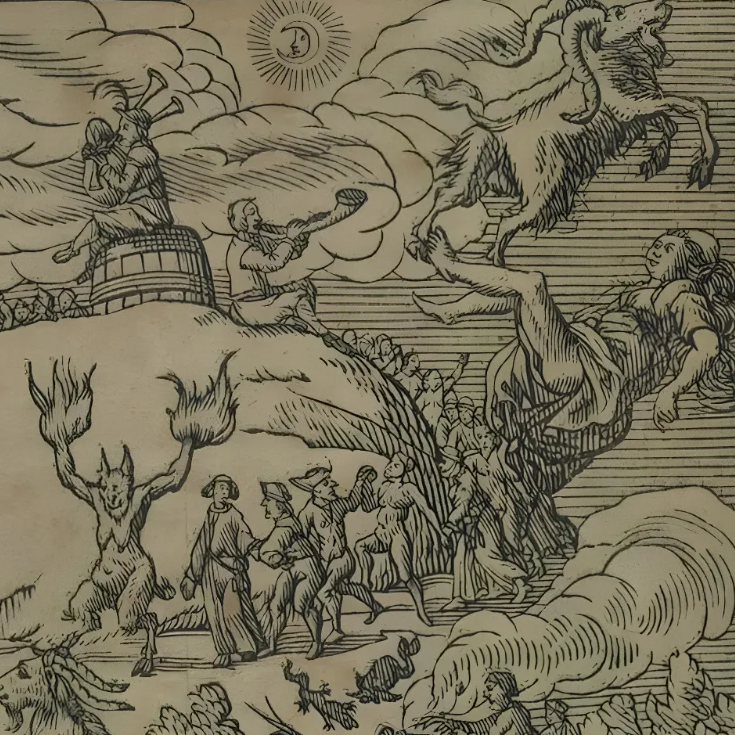
This essay explores the representations of the devil's body in early modern demonological literature. In the imagery crafted by theologians and legal scholars during the European witch hunts, opposition to human and divine order became tangible as a demonic heresy. This heresy manifested itself in the spiritual, physical, and sexual union between witches and the devil. Drawing on both theological and scientific discourses, demonological narratives reimagined the devil not merely as an evil spirit or a fallen angel, but as a corporeal, hybrid entity, composed of human and animal parts, as well as natural elements such as air. Constantly undergoing transformation, the devil’s body evoked intellectual anxieties about hybridization, permeability, and interspecies interaction. The devil’s ontological ambiguity – his transformations, anthropomorphism, and sexual encounters with humans – exposed the fragility of categorical boundaries and challenged the notion of human exceptionalism. At the same time, the devil’s embodied presence on earth became a focal point for reflecting on human nature and the boundaries between the human and the non-human during a period of profound social, intellectual, and cultural transformation.
Downloads
Downloads
Gepubliceerd
Licentie
Copyright (c) 2025 Androniki Dialeti (Auteur)

Dit artikel is gelicentieerd onder de Naamsvermelding 4.0 Internationaal licentie.